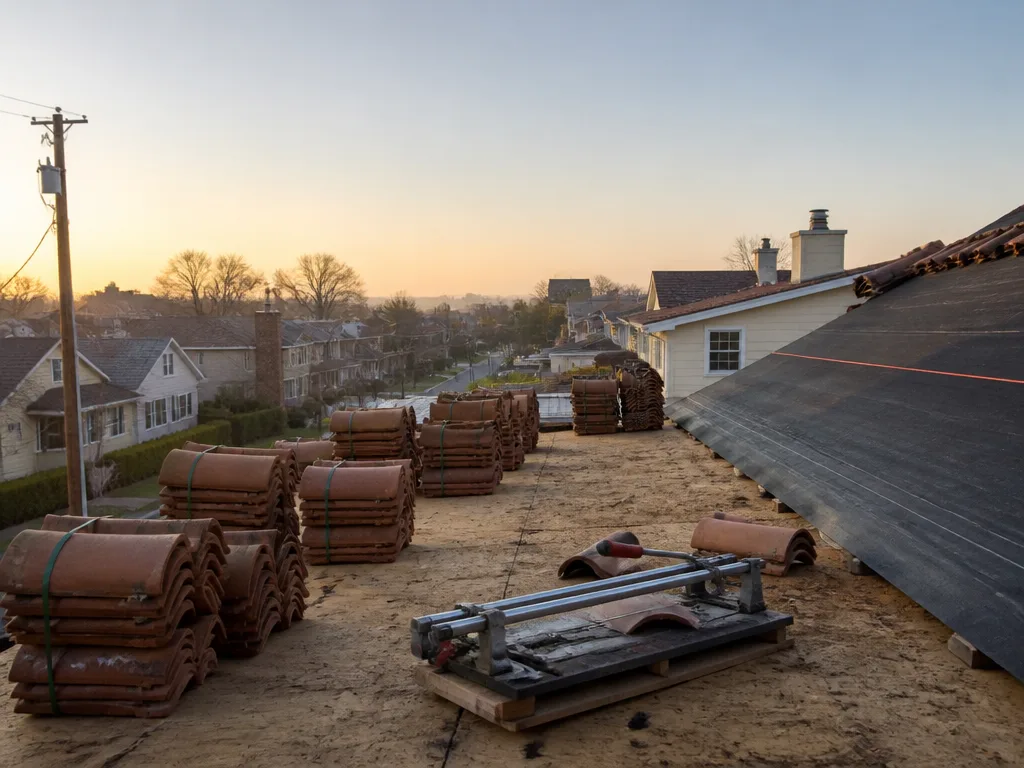
Tile roofs last a long time. Clay and concrete can hold up for decades if the underlayment beneath them stays sound and nothing is pulling the tiles out of line. The trouble is that a tile roof rarely fails all at once. It gives you hints first, and most of those hints are easy to miss from the driveway. Here is what our crews look for, and what each sign usually means.
Cracked, chipped, or broken tiles
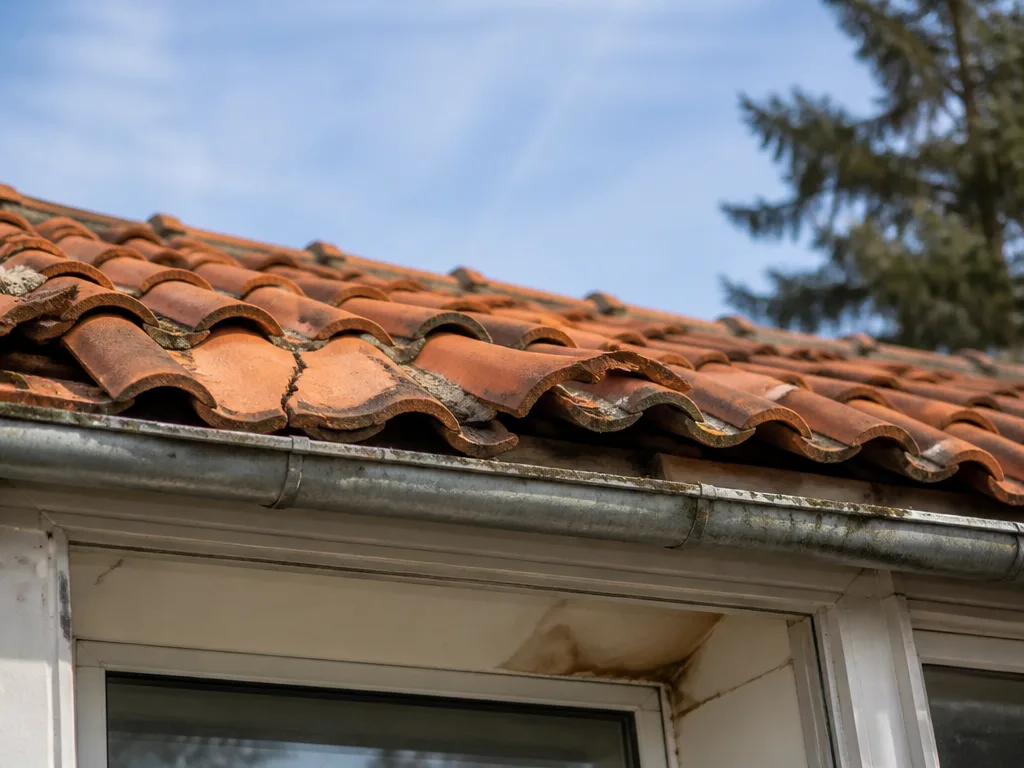
A single cracked tile is not a crisis. Foot traffic from a satellite dish install, a dropped tree limb, or a hailstorm can all break one. But when you start seeing a cluster of broken pieces in the same slope, something is repeating. Often it is wind uplift or an impact pattern that tells you which side of the house took the hit.
Walk the yard after a storm and look for shards on the lawn, in gutters, or piled near downspouts. Those fragments give you a rough map. If most of them come off the west or south side, that is where the damage started.
Replacing individual tiles is usually straightforward, as long as the profile still matches and the tiles around the break are not already brittle. Older clay can be hard to source, so the first step is always confirming what you have.
Slipped, shifted, or missing tiles
Tiles are held in place by nails or clips, and by the way each row interlocks with the next. When fasteners corrode or back out, a tile can slide down and leave a gap. Sometimes the tile is still sitting there but has rotated, so the overlap no longer sheds water.
Look for rows that appear crooked when you stand at the end of the eave and sight along them. Look for bare patches where a tile used to be, and for tiles that sit higher or lower than their neighbors. A slipped row is a warning that the fastening system has started to fail, and waiting usually means more tiles come loose during the next wind event.
What a missing tile usually points to
- Corroded or undersized nails, common on roofs that are several decades old
- Wind uplift at the edges, rakes, and ridge where pressure is highest
- A failed clip or bird-nesting disturbance under the tile
Cracked mortar, ridge caps, and hip seals
Ridge caps and hip lines on many tile roofs are sealed with mortar or a set-in-place cap. Mortar is not meant to be permanent. Hairline cracks appear as the material ages and expands and contracts with temperature swings. Small cracks are a maintenance item. Larger ones, or a cap that rocks when you press it, mean water is getting underneath.
Pay attention to any crumbling powder or chunks at the ridge. That material is no longer doing its job, and the exposed area can let wind-driven rain reach the underlayment. Left alone, the damage usually spreads sideways along the line.
Water stains and drips inside the house
This is the sign people notice last, and it is the one that tells you the problem has already moved past the tiles. A brown ring on a ceiling, a bubbling patch on painted drywall, or a damp smell after rain means water has gotten through the roof system and is traveling along framing.
Where the stain sits matters. A stain directly under a valley, a chimney, or a plumbing vent on the roof usually points to flashing or a seal failure at that penetration. A stain in the middle of a large open ceiling can mean water has run along a rafter before showing up. Our crews often start in the attic with a flashlight, looking for dark wood, staining on the underside of the deck, or daylight coming through.
Do not assume the stain is old just because it looks dry. Check it after the next rain. Water stains that grow or darken are active leaks.
Rusted or lifting metal flashing
Flashing is the metal that seals where the roof meets a wall, chimney, skylight, or vent pipe. On tile roofs it often goes around step flashing and counterflashing. Rust streaks, pinholes, or a gap where the metal pulled away from the masonry are all early signs of water entry.
Look at the chimney base and the area where a wall stops and the roof begins. If you see a bright line of mortar cracking beside the metal, or a strip of flashing that has lifted and no longer lies flat, that spot needs attention before the next storm season.
Sagging, soft spots, or a hollow sound underfoot
A tile roof is heavy, which means its supporting deck and rafters have to be sound. When water has been sitting in the underlayment for a long time, the deck can soften and the roof line can start to dip. A sag is serious. It means structure is involved, not just the surface.
Stand on the sidewalk across from the house and look straight down the ridge. If it bows, or the eave line dips between rafters, call a roofer soon. Do not walk on a roof you suspect has soft decking. Tile is slippery and breaks under weight, and the people who get hurt are usually the ones trying to check it themselves.
Algae, moss, and white chalky deposits
Algae streaks are mostly cosmetic, but they hold moisture against the tile and can speed up surface wear. Moss is worse. Its roots lift tiles and trap water under them. White, chalky deposits on concrete tile, called efflorescence, mean moisture is moving through the tile body. That is a sign the tile is absorbing water faster than it should, and it often shows up alongside hairline cracks.
Moss growing in the valleys or along the eave is a strong hint that water is pooling there. Clear it carefully, because pressure washing can strip the tile glaze and make the problem worse.
What to do next
If you noticed one sign, get it checked before it becomes two or three. A roof is a system, and a cracked tile, a loose ridge, and a rusted flashing often share the same cause. Our roofers can tell you what is driving each one, which repairs can wait a season, and which need to happen before the weather turns.
Take photos now while you are thinking about it. Note which side of the house the problem is on and whether it follows a storm. That information helps any roofer you call, and it makes the conversation faster. Roofing Contractors serves homeowners across the United States, with local crews wherever you are. When you are ready to talk through what you are seeing, give our team a call and describe the spots you noticed.