Why winter is the hardest season on your roof
Your roof doesn't get a break when the temperature drops. It takes freeze and thaw cycles, wind-driven rain, heavy snow load, and the occasional ice storm that rolls through a region nobody expected. Across the country, the details change. A roof in the upper Midwest deals with ice dams. A roof in the Southeast gets soaked and then baked. A roof in the mountain West gets hammered by wind. The checklist below works for most of them, and we'll point out where the local climate changes the picture.
Local crews wherever you are see the same pattern every year. Most winter roof damage starts as something small: a lifted shingle, a cracked sealant bead, a gutter pulled loose by ice. Those things are cheap to fix in October and expensive to fix in March.
Do this walk-through on a dry, calm day, ideally before the first hard freeze. If you can't safely get on a ladder, you can still do most of the ground-level checks from the yard with binoculars.
The ground-level checks you can do this weekend
Start from the outside. Walk the full perimeter of the house and look up. You're scanning for shingles that look curled, cupped, or missing entire tabs. Dark streaks are normal on some shingle types, but bare patches or granule piles at the base of downspouts are not. Those granules are the protective layer wearing off.
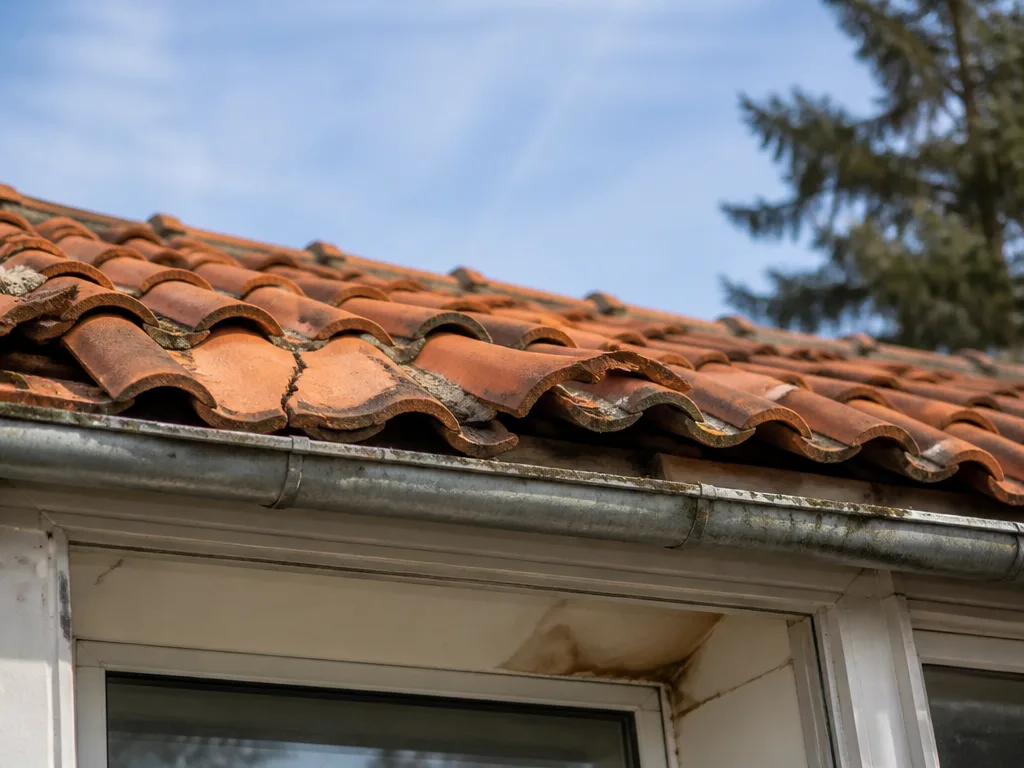
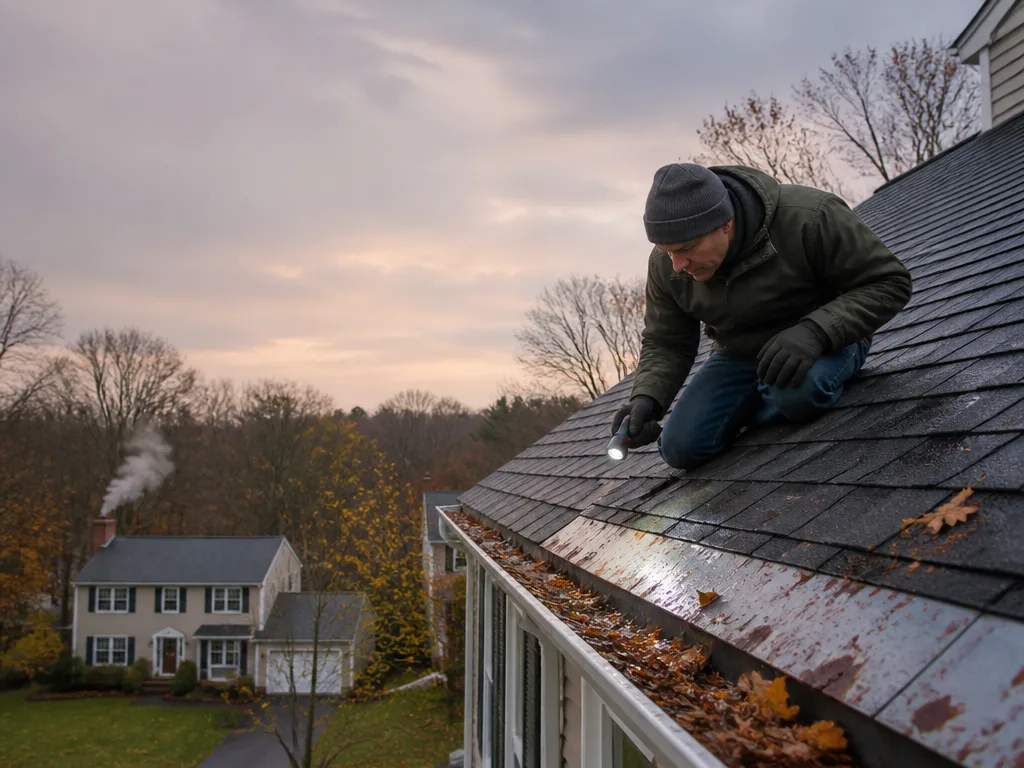
Next, check the gutters. Look for sagging sections, separated seams, and anything full of shingle grit or leaves. Clogged gutters hold water against the fascia and can push it under the first course of shingles once temperatures swing. Clear them before the leaves freeze into place.
Look at the chimney and vent pipes too. Check the metal flashing around the base. If the sealant has cracked or pulled away from the masonry, water will find that gap. You'll often see a dark stain on the ceiling below the chimney before you see anything wrong on the roof itself.
Finally, look at the trees. Any limb that overhangs the roof is a problem waiting for a windstorm. Trim branches back so they're at least several feet clear of the surface, and remove anything dead.
Inside the attic: the check most homeowners skip
The attic tells you more about winter performance than the shingles do. Go up on a cold, clear morning with a flashlight. You're looking for daylight coming through the roof boards, which means a gap. You're also looking for frost on the underside of the sheathing, which signals moisture escaping from the living space.
- Check the insulation. Compressed or displaced insulation over the attic floor reduces airflow and lets warm air melt snow on the roof, which is the first step toward ice dams.
- Confirm the soffit vents aren't blocked by insulation or stored boxes. Air needs to enter at the eaves and exit at the ridge.
- Look for water stains on the rafters or roof boards. Old stains that are dry now still tell you where water got in last spring.
- Check the exhaust fan ducts and bathroom vents for disconnected joints. Moist air blowing into the attic is a common cause of frost buildup.
If the attic is warm, humid, and full of frost on a cold morning, your ventilation or air sealing needs attention. That combination is what drives ice dams in colder regions and rot in every region.
Climate-specific things to watch for
Heavy snow regions
If you get regular snowfall, watch the snow load. Snow is heavier than most homeowners expect, and wet snow is far heavier than dry powder. Clear the first few feet from the eaves if you can do it safely with a roof rake from the ground. Never climb onto a snowy roof to clear it. That's the single most common way people get hurt on winter roofing jobs.
Ice dam regions
Ice dams form when melting snow runs down the roof and refreezes at the cold eave. The water backs up under the shingles. The fix is almost always attic air sealing and insulation, not a heat cable taped to the gutter. A roofer can check whether your attic is leaking heat into the roof surface and recommend the right fix.
Wind and storm regions
Strong winter winds lift shingle edges and pull at flashing. After any significant storm, do a quick walk-around and look for debris, loose tabs, and shingles on the ground. Note the date and photograph anything you find, so you have a clear record if you call a roofer later.
Mild, wet winter regions
Where winter means long stretches of rain instead of snow, algae and moss become the real concern. Moss holds moisture against the shingles and lifts their edges. Look for dark green or black growth on north-facing slopes. Gentle cleaning in the right season helps, but aggressive pressure washing can strip granules and shorten the roof's life.
When to call a roofer instead of waiting
Some problems can wait until spring. Others can't. Call a roofer soon if you see daylight in the attic, a ceiling stain that's growing, shingles that have blown off in a storm, or sagging in a roof section. Also call if you see active water dripping during a thaw, because that water is finding a path into the structure.
Our team handles winter calls in every region we serve, and most of them come down to one of two things: a loose flashing detail or an attic ventilation problem. Both are much easier to fix before the next cold snap. If you're not sure what you're looking at, describe what you see on the phone and our crew will tell you whether it needs a visit this season or can wait until the weather settles. Give Roofing Contractors a call to get on the schedule. We schedule same-week visits in most areas when the forecast allows, and we'll tell you honestly what we'd look at first.